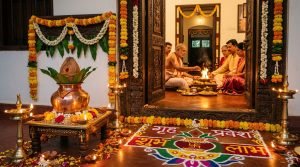
Navaratri Vratam is a nine-night sacred Hindu festival and austerity observed biannually during seasonal solstitial junctions (Ritu Sandhi)—most prominently Sharad Navratri (Ashwin Shukla Pratipada to Navami in autumn) and Chaitra Navratri (Chaitra Shukla Pratipada in spring). The vratam integrates physical detoxification through Sattvic fasting (Phalahara), psychological mastery through Devi mantra japa, and spiritual elevation through the sequential invocation of the nine manifestations of Goddess Durga (Navadurga), culminating in Maha Navami and Vijayadashami.
The Cosmic Science of Ritu Sandhi Fasting
In Ayurvedic physiology and Vedic cosmology, human biological rhythms are synchronized with solar transitions. The change of seasons—particularly between monsoon and winter (Sharad) and between winter and summer (Vasanta)—creates a physiological junction known as Ritu Sandhi.
During this period, human digestive fire (Jatharagni) and natural immunity fluctuate, making the body susceptible to toxins (Ama). The Navaratri fasting protocol is therefore an ingenious Shastric integration of biological purification and intense spiritual sadhana:
- Elimination of Rajasic and Tamasic Foods: Onions, garlic, processed grains, wheat, rice, and ordinary table salt are set aside.
- Adoption of Sattvic Nutrients: Fruits, milk, makhana, buckwheat flour (kuttu), water chestnut flour (singhara), and rock salt (sendha namak) nurture cellular detoxification without taxing digestive metabolism.
- Mental Stillness: Conserving digestive energy frees neurological bandwidth for deep meditation, mantra recitation, and alignment with the Divine Feminine principle (Shakti).
The Nine Forms of Durga: Navadurga Matrix
According to the Devi Kavacham of the Markandeya Purana, the Supreme Mother incarnates in nine sequential forms, each governing a specific spiritual virtue and subtle yogic energy center (Chakra):
| Day & Tithi | Navadurga Form | Governing Chakra | Sacred Bhog Offering | Spiritual Attribute |
|---|---|---|---|---|
| Day 1 (Pratipada) | Maa Shailaputri | Muladhara (Root) | Pure Cow Ghee | Stability, grounding, health |
| Day 2 (Dwitiya) | Maa Brahmacharini | Swadhisthana (Sacral) | Sugar / Fruits | Austerity, penance, detachment |
| Day 3 (Tritiya) | Maa Chandraghanta | Manipura (Solar Plexus) | Milk / Kheer | Bravery, serenity, protection |
| Day 4 (Chaturthi) | Maa Kushmanda | Anahata (Heart) | Malpua | Cosmic creation, vitality |
| Day 5 (Panchami) | Maa Skandamata | Vishuddha (Throat) | Banana | Maternal grace, salvation |
| Day 6 (Shasthi) | Maa Katyayani | Ajna (Third Eye) | Honey | Righteous wrath against evil |
| Day 7 (Saptami) | Maa Kalaratri | Sahasrara (Crown) | Jaggery | Destruction of ignorance & fear |
| Day 8 (Ashtami) | Maa Mahagauri | Sahasrara (Crown) | Coconut | Purity, deep peace, liberation |
| Day 9 (Navami) | Maa Siddhidatri | Universal Consciousness | Til (Sesame) / Halwa | Bestowal of all Siddhis |
Regional Traditions: South Indian Temple Alankarams
While North Indian households follow the Navadurga order, South Indian temples—most famously the sacred shrine of Sri Durga Malleswara Swamy Varla Devasthanam (Kanaka Durga Temple) in Vijayawada and the historic Mysore Chamundeshwari Temple—honor Goddess Durga through majestic daily Alankarams based on the Krishna Yajurveda and Devi Bhagavata Purana:
- Sri Swarna Kavachalankrita Durga Devi
- Sri Bala Tripura Sundari Devi
- Sri Gayatri Devi
- Sri Annapurna Devi
- Sri Lalitha Tripura Sundari Devi
- Sri Maha Saraswati Devi (celebrated during Moola Nakshatra)
- Sri Mahishasura Mardini Devi (celebrated on Durga Ashtami during the pivotal Sandhi Puja)
- Sri Raja Rajeshwari Devi (the supreme Empress of the cosmos on Vijayadashami)
The Supremacy of Chandi Homam & Devi Mahatmyam
The ultimate ritual expression of Navaratri is the performance of the Maha Chandi Homam. Based on the 700 sacred mantras of the Durga Saptashati (also known as Devi Mahatmyam) from the Markandeya Purana, the yajna invokes the collective effulgence of Mahakali, Mahalakshmi, and Mahasaraswati.
Scriptures state that performing or witnessing a Chandi Homam during Navaratri dissipates severe planetary afflictions, destroys malefic black energies, rectifies long-standing ancestral doshas, and shields the family with impenetrable divine grace. For complete step-by-step guidance on household rituals, follow our Sharad Navratri Durga Puja Vidhi.
Frequently Asked Questions
What is the spiritual significance of Sandhi Puja during Navaratri?
Sandhi Puja takes place precisely at the sacred juncture where Ashtami Tithi ends and Navami Tithi begins (spanning the last 24 minutes of Ashtami and the first 24 minutes of Navami, lasting 48 minutes total). It commemorates the exact moment Goddess Durga manifested as Chamunda to annihilate the demons Chanda and Munda.
When is Kanya Puja (Kanjak) performed?
Kanya Puja is performed on either Durga Ashtami or Maha Navami. Nine young pre-pubescent girls (representing the nine forms of Goddess Durga) along with one young boy (representing Batuk Bhairava) are invited, washed with sacred water, fed halwa-chana-puri, and honored with gifts and prayers.
Can grains be consumed during Navaratri fasting?
Traditional Shastric fasting prohibits cereal grains such as wheat, rice, corn, and lentils. Practitioners consume pseudo-grains like Singhara (water chestnut flour), Kuttu (buckwheat), Samak rice (barnyard millet), sabudana, fresh fruits, and dairy products seasoned with rock salt (Sendha Namak).
How do I check the exact Tithi dates for Navaratri in my city?
Because Tithi boundaries shift dynamically depending on lunar-solar longitude, you can consult our real-time Daily Panchangam to check the exact Udaya Tithi and Muhurtham timings for Ghatasthapana in your local area.
{
“@context”: “https://schema.org”,
“@type”: “FAQPage”,
“mainEntity”: [
{
“@type”: “Question”,
“name”: “What is the spiritual significance of Sandhi Puja during Navaratri?”,
“acceptedAnswer”: {
“@type”: “Answer”,
“text”: “Sandhi Puja takes place precisely at the sacred juncture where Ashtami Tithi ends and Navami Tithi begins (spanning the last 24 minutes of Ashtami and the first 24 minutes of Navami, lasting 48 minutes total). It commemorates the exact moment Goddess Durga manifested as Chamunda to annihilate the demons Chanda and Munda.”
}
},
{
“@type”: “Question”,
“name”: “When is Kanya Puja (Kanjak) performed?”,
“acceptedAnswer”: {
“@type”: “Answer”,
“text”: “Kanya Puja is performed on either Durga Ashtami or Maha Navami. Nine young pre-pubescent girls (representing the nine forms of Goddess Durga) along with one young boy (representing Batuk Bhairava) are invited, washed with sacred water, fed halwa-chana-puri, and honored with gifts and prayers.”
}
},
{
“@type”: “Question”,
“name”: “Can grains be consumed during Navaratri fasting?”,
“acceptedAnswer”: {
“@type”: “Answer”,
“text”: “Traditional Shastric fasting prohibits cereal grains such as wheat, rice, corn, and lentils. Practitioners consume pseudo-grains like Singhara (water chestnut flour), Kuttu (buckwheat), Samak rice (barnyard millet), sabudana, fresh fruits, and dairy products seasoned with rock salt (Sendha Namak).”
}
},
{
“@type”: “Question”,
“name”: “How do I check the exact Tithi dates for Navaratri in my city?”,
“acceptedAnswer”: {
“@type”: “Answer”,
“text”: “Because Tithi boundaries shift dynamically depending on lunar-solar longitude, you can consult our real-time Daily Panchangam to check the exact Udaya Tithi and Muhurtham timings for Ghatasthapana in your local area.”
}
}
]
}